Hi Everyone-
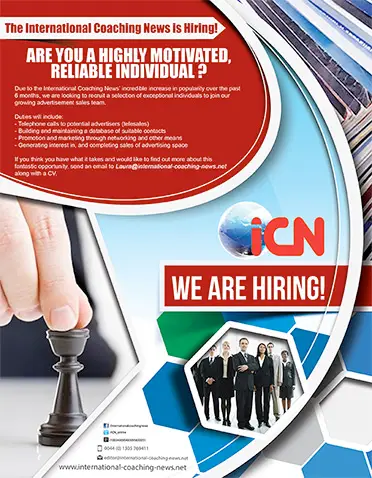
Below is a good example Of everything that is wrong in our coaching industry !!!!
At first glance, if you read the email below,w everything looks OK— but it isn’t !!
First, let’s look at the word Institute— in the United Kingdom, you are not allowed to call yourself an Institute unless you have been recognised and granted permission by a government authority therefore, it carries a certain amount of weight, and you know that to a great extent, you can trust it.. To be independent and to uphold industry standards.
However, in most countries especially the USA, anyone can call themselves an Institute, or Federation or Guild— without any permission whatsoever, thereby misleading their audience into thinking that they have got some type of implied authority or have been granted some sort of mandate !!
This organisation below is absolutely not a bone fide Institute of any kind !!!!
NEXT
Institutes are meant to be completely impartial in whatever industry they represent– therefore, how can they be offering training and qualification and at the same time act as a governing body or a body that issues independent accreditation !! They can’t-
This I really believe, is a good example and argument to say that our industry does indeed need to be regulated. There are very few governing bodies, or federations, or Institutes in our Coaching industry that are genuine and honest and have the implied backing of an official or government department.
One of the very few exceptions is the IAPC&M – International Authority for Professional Coaching and Mentoring, which has actually been granted the authority by the British government to use the word Accreditation within their title
Warmest
Gerard
Welcome to Edition 360 of Coaching Inspirations
Dear Gerard,
Positive psychology is often associated with the positive aspects of life, yet it is much more than that.
The fascinating, scientific study of what makes life worth living also explores the painful experiences we face, along with uncomfortable thoughts, emotions, and behaviours (Ivtzan, Lomas, Hefferon, & Worth, 2016).
While positive psychology continues to have a profound impact on psychology, it also provides a rich and powerful new stimulus to the world of coaching, with clients reaping the rewards and learning how to flourish rather than simply survive (Driver, 2011).
Whether you are planning to use positive psychology theory and practices in your coaching or wish to understand the latest developments within the field, you will surely find valuable information in this guide. It offers both a broad and a deep dive into positive psychology in coaching and a map to the wealth of positive psychology resources we have available.
Also in this edition: LCI course information; graduate stories; personal development tips; plus much more!
Enjoy your reading!
LCI Team.
INSTITUTE NEWS
Graduate Certificate in Coaching and Leadership – Term 3, 2025 Second Offer Round Now Open
LCI’s sister Institute, The Australian Institute of Professional Counsellors (AIPC), has an innovative post-graduate coaching and leadership course.
AIPC’s Graduate Certificate in Coaching & Leadership has been specifically designed for Coaches, Leaders, Managers and Professionals to enhance their organisational coaching knowledge and improve work team performance.
It is an innovative course focusing on developing effective application of leadership and coaching methods in organisational and work team settings.
In the course, you will:
- Learn how to improve your team’s performance through effective application of leadership and coaching methods.
- Establish a strong grounding in current leadership and coaching methodologies.
- Link your leadership and coaching knowledge and skills to individual, team and organisational strategies and performance.
There is no degree required for entry! You can commence with as little as 5 years professional or technical experience.
Places are limited, so we encourage prospective students to submit an application prior to the closing date of Friday 6th June at 5pm to ensure their place.
The course is also approved for FEE-HELP so you can loan your tuition fees through the government’s FEE-HELP* program.
You can get in touch with one of our friendly course advisers on 1800 334 348
The Institute is renowned for its industry leading student support services and an innovative program developed by educators of the highest academic and experiential standard of any coaching educator in Australia.
#1 in Education Service & Support
We’re proud to set the benchmark for service and support in Coaching Education. We have set ourselves the goal: “To provide the highest standard in coaching education and support services in the industry.” You are never alone in your studies and the support doesn’t finish at graduation, but continues on through your Life Coaching career with graduate, business development, mentoring and supervision programs and support.
Professionally developed curriculum
Institute learning is developed by highly qualified and experienced professionals to world recognised standards. The curriculum is developed by a professional academic committee incorporating the latest domestic and international research and developments. In this way, the Institute is able to amalgamate client needs with practitioner experience and global industry developments.
Guarantee of Education Excellence
You are safeguarded by the Institute’s Guarantee of Education Excellence. Having specialised in life coaching education since 1999 we’ve refined our curriculum and support services to be the industry benchmark. Our guarantee to new students is this – if for any reason whatsoever you choose to withdraw from your course within 30 days, we’ll provide a no questions asked 100% refund.
FEATURED ARTICLE
Positive psychology is often associated with the positive aspects of life, yet it is much more than that.
Applied Positive Psychology: The Ultimate Guide
The fascinating, scientific study of what makes life worth living also explores the painful experiences we face, along with uncomfortable thoughts, emotions, and behaviours (Ivtzan, Lomas, Hefferon, & Worth, 2016).
While positive psychology continues to have a profound impact on psychology, it also provides a rich and powerful new stimulus to the world of coaching, with clients reaping the rewards and learning how to flourish rather than simply survive (Driver, 2011).
Whether you are planning to use positive psychology theory and practices in your coaching or wish to understand the latest developments within the field, you will surely find valuable information in this guide. It offers both a broad and a deep dive into positive psychology in coaching and a map to the wealth of positive psychology resources we have available.
Before you continue, we thought you might like to download our three Positive Psychology Exercises for free. These science-based exercises explore fundamental aspects of positive psychology, including strengths, values, and self-compassion, and will give you the tools to enhance the wellbeing of your clients, students, or employees.
Chapter 1 – Positive Psychology in Coaching
Positive psychology might best be introduced with a quote from one of its founders, Martin Seligman (2011, p. 7):
“Positive psychology is about the meaning of those happy and unhappy moments, the tapestry they weave, and the strengths and virtues they display that make up the quality of your life.”
When applied to coaching, such an approach shows clients what is possible in their lives and wakes them up to the notion that they have the personal resources needed to enact such changes (Biswas-Diener, 2010).
While the influence of positive psychology continues to grow, there are at least six central themes that remain highly relevant to coaching, all of which are found in the resources that follow (Driver, 2011; Snyder & Lopez, 2021):
- Strengths
- Mindset
- Resilience
- Positive emotions
- Relationships
- Personal growth
Together, they provide the opportunity for clients to “live more fully and more successfully in the reality of the present moment and allow them to find growth and success for themselves, whatever life throws at them” (Driver, 2011, p. viii).
Applying positive psychology in coaching
When clients are deciding on the type of coaching they are looking for – sometimes referred to as coach shopping – they may ask how positive psychology coaching differs from other types of coaching (Biswas-Diener, 2010).
It’s a great question.
Positive psychology shares the following factors with other types of coaching, including (Biswas-Diener, 2010):
- Co-created relationships
- Assumptions that the clients are functional and resourceful
- Professional relationships, involving payments, contracts, and ethical behaviour
- Use of similar tools, including open questions, reframing, acknowledgement, and building accountability
However, most importantly, positive psychology emphasizes the scientific study of what is right with people rather than wrong and attends to individual and group flourishing (Biswas-Diener, 2010).
The following articles provide examples of coaching that are deeply rooted in the science, theory, and practice of positive psychology and therefore focus on real-world interventions that promote superior functioning.
Executive Coaching
Executive coaching can have a broad impact, helping clients achieve their goals while improving their own and their organization’s effectiveness. An executive coach’s role is that of an agent of change within the organization, providing highly personalized leadership development.
Our Executive Coaching: Certification, Career, and Job Opportunities article explains the role of executive coaches and how to become one.
Shared approaches with sports psychology
While sports psychology may initially appear a very different discipline from positive psychology, it has many overlaps and offers valuable lessons for positive psychology coaches. Sports psychology places considerable focus on goal setting, overcoming setbacks, maximizing performance, and focusing on strengths.
In our article 14 Sports Psychology Techniques & Tips for Coaching Athletes, we look at several critical techniques for overcoming performance obstacles and how to develop the confidence and mindset to be at our best, including reflection, coping techniques, mindfulness, focus
Financial coaching
As with other areas of coaching, financial coaching helps clients learn new skills and set and progress toward realistic goals. Coaching sessions encourage a deeper understanding of spending habits and focus on the client’s economic challenges and aspirations.
Use the Financial Coaching: Everything You Need to Run Your Business article as a helpful and practical guide to encourage your client’s autonomy while coaching them through the change process.
Leadership coaching
Leadership coaching has the potential to turn a manager into a coach, offering a supportive guide to improving employees’ relationships and performance. Ultimately, it helps leaders maximize their abilities and resources by switching to a culture of coaching within the organization.
Review What Is Leadership Coaching? (Including Certification Options) to understand how this approach can change a leader’s impact within their company by replacing a command-and-control style with one of active listening (Ibarra & Scoular, 2019).
Coaching work-life balance
Perhaps more important than ever, finding and maintaining a work–life balance is a focus for many in their roles as professionals, parents, partners, and carers. A coach provides valuable input, helping clients find a workable balance that meets work demands while prioritizing family, health, happiness, and wellbeing (Casper, Vaziri, Wayne, DeHauw, & Greenhaus, 2018).
Our article Coaching on Work–Life Balance: 11 Strategies & Questions focuses on the strategies, exercises, and questions that clarify what work–life balance means for the individual and how to achieve it.
How does it work? Positive psychology in practice
Positive coaching psychology is based on several basic, yet vital, tenets, including the following (modified from Kocabas & Üstündağ‐Budak, 2017):
- Humans experience an innate drive for growth, change, and overcoming obstacles.
- Focusing on strengths is more powerful and effective than focusing on weaknesses.
- Positivity is a rich resource for promoting and facilitating change.
- Both positive and negative aspects of life must be attended to by the coach and client.
- Clients can be understood through scientifically derived theory, knowledge, and assessments.
The following articles provide insight and guidance regarding the professional skills required of positive psychology coaches, many of which are similar to those of other coaching styles and approaches.
Building rapport
Establishing rapport is vital for coaching, calming the client, and fostering confidence in the coach and the process. If a healthy rapport is successfully established, the client–coach relationship becomes one of trust, respect, and facilitating change (Miller & Rollnick, 2013).
Validation
While vital in therapy, validation is equally essential in coaching. The coach may disagree with what the other person is saying, yet they must listen without judgment and pay close attention to their thoughts, feelings, and life goals (Rather & Miller, 2015).
The theory, guidance, and worksheets offered in What Is Validation in Therapy & Why Is It Important? provide helpful insights and practices for positive psychology coaches.
Establishing boundaries
Creating healthy boundaries is another necessary process for both coaches and therapists. The professional treatment of coach and client, and the nature of their relationship, remains unclear without them.
Use How to Establish Healthy Boundaries With Your Therapy Clients to explore the importance of and steps involved in understanding and communicating boundaries and putting in place workable, ethical, and legal protection with your clients.
Chapter 2 – Coaching Techniques and Tools
By focusing on the central themes of positive psychology, coaches can turn clients’ ideas into actionable goals, particularly when they become stuck in negative or unhelpful thinking. Examples of these kinds of unhelpful thinking patterns may include the following (Driver, 2011):
- Living in denial and dreaming of a ‘golden’ past that may not be real
- Dreaming of a future rescue from their present lives (e.g., winning the lottery or receiving an oversized severance package)
- Feeling hopeless, negative, and lost, without the dream of being capable of change
When we are committed to a life we value and the goals we wish to accomplish, we naturally focus on our strengths, gain a greater sense of meaning, and enjoy our lives to the fullest (Biswas-Diener, 2010).
The following articles and resources offer tremendous insight and value for coaches wishing to use positive psychology theories and techniques in their practices to work on inner strengths, promote flourishing, and adopt positively focused interventions (Gable & Haidt, 2005).
90+ Effective positive psychology techniques
The following articles are dedicated to particular aspects of coaching using positive psychology theories or principles.
Psychoeducation
Psychoeducation involves transferring knowledge to the client and empowering them to promote their wellbeing. When used successfully, it raises the client’s awareness of factors that impact their wellness and fosters the skills they need to adopt new, more helpful behaviors and a better quality of living.
48 Ways to Apply Psychoeducation As a Coach walks you through examples of psychoeducation interventions and introduces science-based tools for your positive psychology coaching sessions.
Online interventions
The adoption of online techniques and software is an exciting recent development in positive psychology coaching. Digitalization frees both clients and coaches from the physical constraints of location and time. More than that, online interventions offer personal, made-to-measure coaching to individuals and groups (Ribbers & Waringa, 2015).
How Online Interventions Are Changing Coaching Forever is an insightful article that looks at the potential to support new coaching approaches online and the tools and techniques that lead to intrapersonal and interpersonal gains.
Group work
Offering coaching to groups has the potential to expand a coach’s reach, helping more people and increasing income. Many of positive psychology’s most impactful techniques are highly effective in group situations, while remaining focused on individual needs and goals.
The Organizing an Effective Group Coaching Session: 20 Techniques and Your Ultimate Group Coaching Toolkit: Best Activities & Topics articles provide information on many of the tools used by the most experienced coaches worldwide, helping clients craft valuable experiences for their clients.
Signature coaching sessions
Signature coaching programs can be created with individual, group, or organizations in mind, supporting performance and development needs while facilitating growth and change.
The How to Create Your Signature Coaching Program article explains how to develop a signature offering and boost the success and expansion of your business.
Wheel of life
The wheel of life is one of the most valued tools within positive psychology coaching. Its power comes from its ability to help the client see and the coach understand balance and imbalance in clients’ lives. If clients can find equilibrium and meaning, they are likely to fulfill their basic psychological needs and commit to growth (Eakman, 2016).
The How to Apply the Wheel of Life in Coaching article introduces this popular life coaching and self-help tool and explains how to use it with skill and impact.
GROW coaching model
While many coaching models are available, few are as popular as the GROW model. Since its creation by John Whitmore (1988) in the 1980s, it has proven effective at helping clients become more productive, self-motivated, and fulfilled.
What Is the GROW Coaching Model? introduces the GROW tool and exercises, worksheets, and coaching questions for use with clients to maximize its value.
Cultivating strengths
Being able to cultivate strengths may be the difference between a life of mediocrity and one of growth and success. Our strengths are the essential elements of who we are and are admired and respected by those who care about us (Niemiec & McGrath, 2019).
Cultivating Strengths at Work: 10+ Examples and Ideas and Personal Strengths & Weaknesses Defined (+ List of 92 Personal Strengths) provide valuable insight into the importance of knowing and using strengths in our work and personal lives.
Building resilience
Resilience is crucial for clients to recover from tough times, learn, and grow. Coaches can help clients by focusing on how they interpret events and identifying attitudes and beliefs that are helpful or harmful (Neenan, 2018).
How to Build Resilience in Counseling: 12 Worksheets & Activities and The Art of Coping: Strategies and Skills to Help Your Clients Cope explore tools for learning to cope with obstacles and build resilience.
5 Top Positive Psychology Tool Collections
Check out the following articles for a vast collection of positive psychology resources for coaching sessions. Each one collates our favorite and most impactful positive psychology tools, techniques, and interventions for use with clients:
- 19 Positive Psychology Exercises to Do With Clients or Students offers a selection of novel ways to include positive psychology in coaching sessions, including benefit finding, signature strengths, and progressive muscle relaxation.
- 19 Best Positive Psychology Interventions + How to Apply Them shares tools and techniques to make our personal and professional lives more fulfilling. Particular favorites include the imagined self technique, gratitude interventions, and the have-a-good day exercise.
- 12 Inspiring Real-Life Positive Psychology Examples focuses on techniques to promote values, strengths, and self-compassion. The best possible self, gratitude visit, and daily strength awareness exercises are great places to start.
- Top 16 Coaching Forms & Templates for Your Sessions provides an essential suite of coaching templates to organize sessions and provide the optimal coaching experiences. Start by checking out some of the intake, evaluation, and life and health coaching forms.
- 28 Coaching Techniques Confident Coaches Use shares confident coaching approaches for client goal setting, motivation, and communication. Why not begin with techniques for use at the beginning of sessions, then continue with motivational and life coaching approaches?
50+ Life coaching tools for your sessions
Next, we take a look at some key tools influenced by positive psychology and used within life coaching and how they help clients live according to their values, build upon their strengths, and master goal setting.
- Developed by Martin Seligman, the PERMA model is a convenient and effective tool for supporting clients’ efforts to achieve fulfillment, happiness, and wellbeing.
Check out the 8 PERMA Model Activities and Worksheets to Apply With Clients article.
- Self-awareness, goal setting, and problem-solving are valuable components of life coaching, helping clients get to know themselves and improve their wellbeing.
Use the worksheets in the 12 Positive Psychology PDFs to Print and Hand Out to support others on their path toward a meaningful life as they develop and grow.
- Life-changing coaching sessions require planning. Crafting practical and actionable plans helps clients achieve impactful, life-changing goals.
Try out the examples in the 15 Coaching Templates and Samples for Life-Changing Sessions article to provide clarity and direction for both the client and coach.
- Structuring life coaching sessions and having a rough outline of the intended conversation will help you make the most of your time with the client.
The 6 Coaching Conversation Examples and Scripts article includes several ideas for structuring your sessions, along with valuable examples of potential dialogues.
- There are many coaching models available for individuals, groups, and team sessions. Selecting the right one can make it easier for your clients to move from their existing state to the one they would like to reach.
The 12 Effective Coaching Models to Help Your Clients Grow article introduces you to several, three of which are aimed at life coaching.
- Powerful questions can help drive effective coaching sessions, particularly in life coaching. The client and life coach both need to be on the same page and understand the client’s existing situation and envisioned future.
100 Most Powerful Life Coaching Questions includes questions focused on work, health, and creating new possibilities and results by changing narratives.
Chapter 3 – How to Become a Positive Psychology Coach
A well-designed coaching program should support individuals and groups through positive change in their work, career, and personal life (Kanatouri, 2020).
A highly effective coach should help their client in the following ways (International Coaching Community, n.d.):
- Change in the way the client wishes, choosing the direction they wish to go
- Support clients in becoming who they want to be
- Empower choice and change through building awareness
These efforts require the right skills, a deep theoretical understanding, and learning from experience.
The following articles review what is needed to be a positive psychology coach and the certifications available.
How to become a positive psychology coach
Self-help books are useful, but a coach is often required to support clients as they get ready for and progress through the change process. As a result, the coach must be well equipped and prepared to share problem-solving techniques.
- How to Successfully Teach Positive Psychology in Groups
Learn how to incorporate positive psychology into coaching sessions with groups and introduce some of the interventions and exercises available. - 32+ Coaching Skills and Techniques for Life Coaches and Leaders
Coaching skills can be learned and are highly transferable to other areas of our lives. This article considers how to become a powerful coach and includes information about professional foundations, relationship co-creation, effective communication, and how to promote learning and positive outcomes. - How to Become a Life Skills Coach & What the Job Entails
Understand what is needed to help clients implement problem-solving behaviors, improve work–life balance, make career changes, and live more healthily. - How to Become a Life Coach: A Step-by-Step Success Guide
There are many paths to becoming a professional life coach. This article provides a step-by-step guide to getting ready to help clients work through challenging problems and gain clarity on vital life decisions.
Training in positive psychology coaching: 25+ Certifications
- Positive Psychology Degree: 13 Opportunities for Eager Students
Explore some of the incredible degree and certification programs available to gain positive psychology expertise. - How to Become a Relationship Coach: 7 Certification Courses
Relationship coaching is an exciting and important specialization. This article explores the certification required to support couples in achieving their relationship goals. - Coaching in Emotional Intelligence: Certification & Resources
Leading a full and happy life requires identifying and managing our emotions. A skilled and experienced emotional intelligence coach can help clients connect with their own and others’ feelings, and experience the resulting performance benefits. - Executive Coaching: Certification, Career, and Job Opportunities
Executive coaching benefits both individual employees and their organizations, improving performance and goal achievement. Learn how to become an executive coach and the certifications available. - What Is Leadership Coaching? (Including Certification Options)
A skillful leadership coach can maximize the performance of leaders and their teams while encouraging a coaching culture throughout the organization. Here we detail strategies and techniques, review training opportunities, and identify the essential certifications.
30+ Life coaching courses, masters degrees, and online options
While there are many overlaps in skills required across coaching styles and approaches, it is important to take a specific look at the sort of training available for life coaches.
- 19 Best Coaching Training Institutes and Programs
Whether transitioning from another industry or having left full-time education recently, anyone with a passion for coaching will hugely benefit from formal training. This article provides details of some of the best International Coaching Federation courses and online options. - 20 Coaching Courses and Online Opportunities
Life coaches can support individuals as they understand their situation, learn how to overcome obstacles, and progress toward their goals. Remote and online learning options are valuable for realizing the dream of becoming a life coach while juggling other aspects of busy lives. Or if you have the resources, there are plenty of university courses available listed in this article.
Chapter 4 – Positive Psychology Coaching Books
There is a wide range of books in both positive psychology and coaching.
While some specialize in particular fields, others are more general, providing insight into exciting approaches for helping individuals, couples, teams, groups, and organizations achieve the goals they set.
Below, we include a selection of some of the best books available that either directly or more generally cover the topic of positive psychology theory and coaching.
100+ Fascinating books that introduce areas of positive psychology
- Self-knowledge: How to Improve Self-Knowledge: 21 Books, Tests, and Questions
- Assertiveness: Building Assertiveness Skills: Top 12 Books & Workbooks
- Self-forgiveness: Fostering Self-Forgiveness: 25 Powerful Techniques and Books
- Motivational interviewing: 15 Motivational Interviewing Books for Helping Clients Change
- Authenticity: 18 Psychology Books on Authenticity and Being Your True Self
- Finding meaning: 7 Best Books to Help You Find the Meaning of Life
- Self-esteem and self-worth: 27 Best Books to Improve Self-Esteem, Self-Worth, and Self-Image
40 Best positive psychology coaching books
- The Top 20 Life Coaching Books You Should Read
- 10 Must-Read Positive Psychology Books
- 3 Fascinating coaching books in Your Mindset Coaching Guide: Best Questions, Courses, & Tools
- 3 Best emotional intelligence books in Coaching in Emotional Intelligence: Certifications & Resources
While it is not easy to pick out specific books, the following shortlist is an attempt to highlight a few of the books that are most helpful in understanding and implementing the knowledge and techniques from positive psychology in coaching.
1. The Oxford Handbook of Positive Psychology – Shane Lopez and C. R. Snyder
Described by many as the seminal reference in positive psychology, this book summarizes much of the relevant literature in the field.
The 65 chapters take the reader through all the major disciplines, including happiness, strengths, positive emotions, hope, courage, and resilience.
Find the book on Amazon.
2. Coaching Positively: Lessons for Coaches From Positive Psychology – Matt Driver
This valuable book by Matt Driver explores how to apply the theory, knowledge, and techniques taken from positive psychology in coaching.
Contemporary coaches can learn from the wealth of practical examples and resources and link positive psychology to related disciplines in coaching.
Find the book on Amazon.
3. The Routledge International Handbook of Critical Positive Psychology – Nicholas Brown, Tim Lomas, and Francisco Jose Eiroa-Orosa
A heavy-weight book in positive psychology, this challenging text has valuable insights into its application into people’s lives through education, practice, and policy.
It would be a valuable addition to anyone’s positive psychology library.
Find the book on Amazon.
4. Practicing Positive Psychology Coaching: Assessment, Activities, and Strategies for Success – Robert Biswas-Diener
Researcher, psychologist, and coach Robert Biswas-Diener created a book that gathers together practical interventions and tools for immediate use in your coaching practice.
Why not give positive psychology strategies, assessments, and reflective exercises a try with your clients and bring many of the benefits of this powerful approach to your sessions?
Find the book on Amazon.
Chapter 5 – A Take-Home Message
Positive psychology is a celebration of human flourishing. Rather than being dedicated to what is wrong in our lives, it provides a valuable focus on what is right. It uses our strengths, psychological needs, and self-awareness to promote happier lives that strive for physical and mental wellbeing and goal achievement (Seligman, 2011; Snyder & Lopez, 2021).
Combined with coaching, positive psychology has the tools to maximize individual and group performance through a focus on strengths, mindset, resilience, positive emotions, relationships, and personal growth (Driver, 2011).
An effective coach can help unlock a person’s potential and maximize their performance while encouraging self-learning and autonomy. A tailored coaching program supports positive change and achievement in all areas of our careers and personal lives (Kanatouri, 2020).
This article is a map to a vast selection of articles we have on positive psychology in coaching. Treat each section as a starting point for further exploration and an introduction to the rich and exciting field of positive psychology and its potential to transform and inform coaching as you support clients traveling toward their goals.
We hope you enjoyed reading this guide. Don’t forget to download our three Positive Psychology Exercises for free.
References
- Biswas-Diener, R. (2010). Practicing positive psychology coaching: Assessment, activities, and strategies for Success. Wiley.
- Brown, N. J. L., Lomas, T., & Eiroa-Orosa, F. J. (Eds.). (2017). The Routledge international handbook of critical positive psychology. Routledge.
- Casper, W., Vaziri, H., Wayne, J., DeHauw, S., & Greenhaus, J. (2018). The jingle-jangle of work–nonwork balance: A comprehensive and meta-analytic review of its meaning and measurement. Journal of Applied Psychology, 103, 182–214.
- Driver, M. (2011). Coaching positively: Lessons for coaches from positive psychology. Open University Press.
- Eakman, A. M. (2016). A subjectively-based definition of life balance using personal meaning in occupation. Journal of Occupational Science, 23(1), 108–127.
- Gable, S. L., & Haidt, J. (2005). What (and why) is positive psychology? Review of General Psychology, 9(2), 103–110.
- Ibarra, H., & Scoular, A. (2019). The leader as coach. Harvard Business Review. Retrieved September 30, 2020, from https://hbr.org/2019/11/the-
leader-as-coach - International Coaching Community. (n.d.). What is coaching? Retrieved December 15, 2021, from https://
internationalcoachingcommunity .com/what-is-coaching/ - Ivtzan, I., Lomas, T., Hefferon, K., & Worth, P. (2016). Second wave positive psychology: Embracing the dark side of life. Routledge, Taylor & Francis Group.
- Kanatouri, S. (2020). The digital coach. Routledge.
- Kocabas, E., & Üstündağ‐Budak, M. (2017). Validation skills in counseling and psychotherapy. International Journal of Scientific Study, 5(8), 319‐322.
- Miller, W., & Rollnick, S. (2013). Motivational interviewing: Helping people change. Guilford Press.
- Neenan, M. (2018). Developing resilience: A cognitive-behavioural approach. Routledge.
- Niemiec, R. M., & McGrath, R. E. (2019). The power of character strengths: Appreciate and ignite your positive personality. VIA Institute on Character.
- Rather, J. H., & Miller, A. (2015). DBT skills manual for adolescents. Guilford Press.
- Ribbers, A., & Waringa, A. (2015). E-coaching: Theory and practice for a new online approach to coaching. Routledge.
- Seligman, M. E. (2011). Authentic happiness. Random House.
- Snyder, C. R., & Lopez, S. (2021). The Oxford handbook of positive psychology (2nd ed.). Oxford University Press.
- Whitmore, J. (1988). Coaching for performance. Nicholas Brealey.
PROFESSIONAL DEVELOPMENT
Functional Medicine
Functional medicine is a field of alternative medicine whose practitioners seek to use a systematic approach to identifying and treating the underlying causes of disease. Functional medicine practitioners take a patient-centred approach which focuses on the interactions between the genetic, environmental, and lifestyle factors that impact health. However, this approach is not without its critics and controversies. In this MISIS unit we will explore this field and its controversies, as well as what relevant research means for helping professionals.
SPECIALTY STREAMS
This edition’s featured Specialty Stream is: Life Cycle Coaching
A notable feature of the Certificate IV in Life Coaching Practice is that it is supported by a range of optional Specialty Streams*.
Each Specialty Stream has been specifically developed to provide you with the opportunity to gain a higher level of practical and theoretical knowledge in specific fields of coaching that are currently in high demand.
Specialty streams include: Executive Coaching, Business Coaching, Workplace Coaching, Health & Wellness Coaching, Career Coaching and Life Cycle Coaching.
Today we feature the Life Cycle Coaching Specialty Stream…
Life Cycle Coaching relates to the various stages people encounter throughout the lifespan, the changes that occur and the impact that this has on individuals. This stream focuses on childhood, adolescence, adulthood and old age as well as on specific life cycle issues such as parenting, career choices and couple relationships. Furthermore, the impact of events such as death and retirement are considered and strategies for dealing with life changes in general.
In this stream students will learn about the stages of the human life cycle and will be equipped with strategies for coping with life transitions. ‘Change’ is an inevitable part of life and effective ways to assist clients manage change will go a long way in helping them lead a fulfilled life. Upon completion of the Life Cycle Coaching Specialty Stream students will gain an awareness of their own life cycle and how it may impact their role as a life coach. Students will also learn how to apply specific life cycle coaching techniques.
Or visit www.lcia.com.au/courses for further information.
*While Specialty Streams are not part of the accredited curriculum, they provide the opportunity to extend your knowledge in specialist fields of coaching.
Download our course guide to learn more about LCI’s Specialty Streams.
| REQUEST A COURSE GUIDE |
LCIA STORIES

Ellie Rentoul
“No matter what was going on in my personal life, the staff at the LCIA have ALWAYS made me feel welcome and supported. I cannot praise the staff at the Institute more: they were my shining light and a consistent voice during these challenging yet very rewarding times.”

Simone Disborough
“Having decided to start up my own executive coaching business, I realised I would need specialized training that would provide me with a professional and accredited coaching qualification, which was my prime reason for choosing LCIA. Throughout the process, I was very impressed with the level of support on offer as well as the high calibre of the LCIA trainers.”
LCI FAQs
Will I be able to receive Austudy while I study my course?
The Certificate IV in Life Coaching Practice is Austudy and Abstudy approved. To find out further details about your eligibility, please contact the Centrelink Youth and Student Line on 13 24 90.
What face-to-face contact can I have during my course?
You have ample opportunity for face-to-face interaction and support at the series of practical workshops. Called ‘Online Skills Workshops’, you’ll demonstrate your coaching techniques to an accredited Master Coach who’ll critique your skills and provide valuable feedback, enhancing your abilities and skills as a Coach.
STUDENT NOTICE
Contact your local Student Fulfilment Centre for up-to-date online practical workshop schedules
If you have any questions regarding your course, please email advisor@lcia.com.au and we’ll reply as soon as possible.
More information: www.lcia.com.au/students
Publication Contacts
Email: ezine@lcia.com.au Website: www.lcia.com.au
Locked Bag 15, Fortitude Valley QLD 4006
Head Office Contact Phone: 1800 683 884
Contact Student Fulfilment Centres
South Australia/NT 1800 683 880
QLD, NSW & ACT 1800 683 882 Victoria/Tasmania 1800 683 883
Western Australia 1800 683 881